
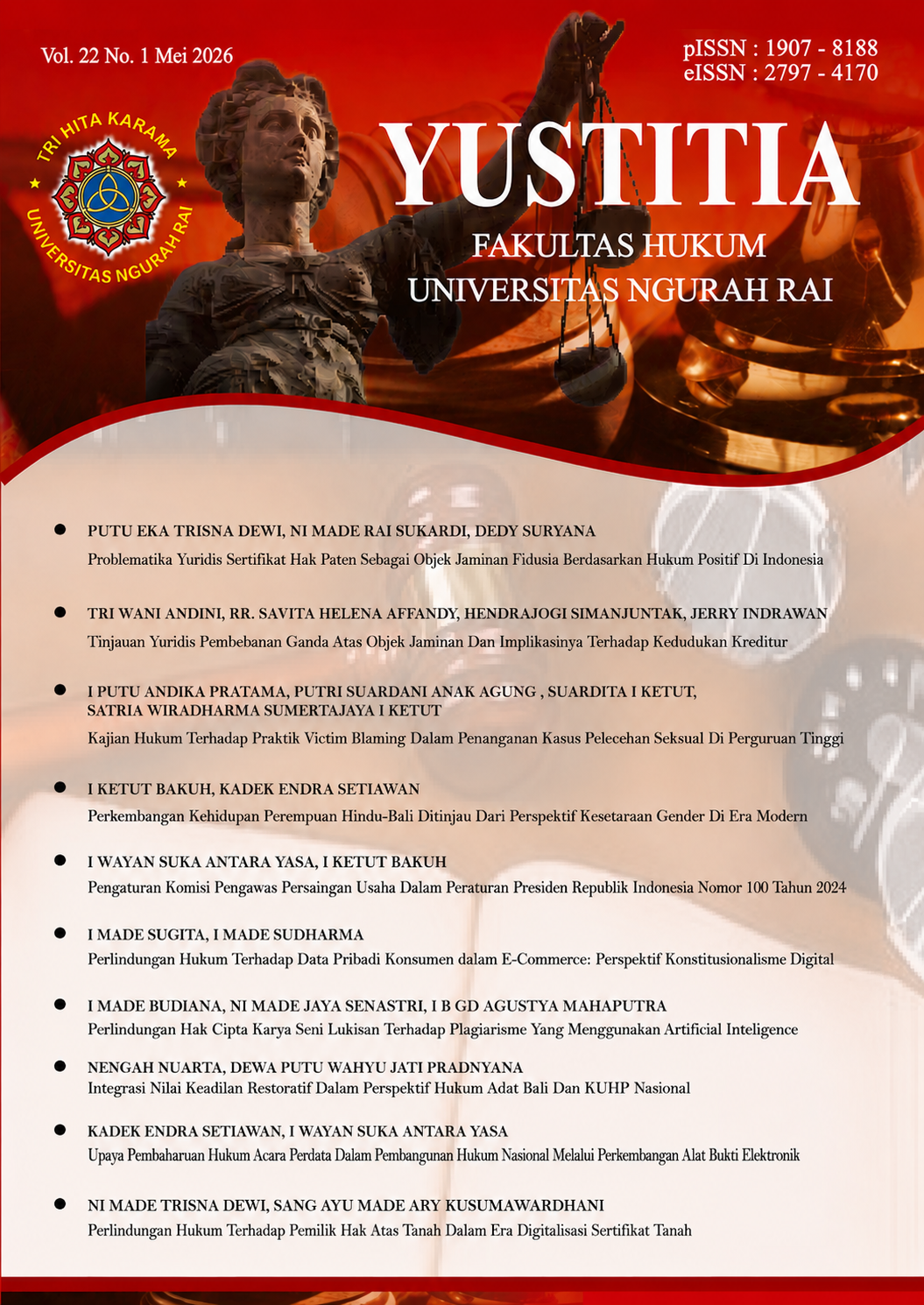
Perlindungan Hukum Terhadap Data Pribadi Konsumen dalam E-Commerce: Perspektif Konstitusionalisme Digital
DOI:
https://doi.org/10.62279/yustitia.v22i01.1822Keywords:
Perlindungan Hukum, Data Pribadi, E-CommerceAbstract
The process of registering personal data into electronic systems has led to an increase in the use of digital services, including e-commerce. However, this situation also increases the vulnerability of consumers' personal data leaks in e-commerce and subsequent misuse by irresponsible parties. Personal data and the right to privacy are constitutional rights that must be guaranteed and protected by the state, as mandated by Article 28G Paragraph (1) of the 1945 Constitution, as they are an integral part of human rights that must be protected in the use of digital platforms, including e-commerce transactions. The purpose of this study is to examine the legal protection of personal data in e-commerce from the perspective of digital constitutionalism and, second, to examine the responsibility of marketplaces for violations of consumer personal data management in e-commerce. The research method used in this study is normative legal research, which refers to doctrines and theories, laws and regulations, and previous research relevant to the problem at hand. The results show that various regulations governing personal data protection include both preventive and repressive legal protection. Preventive protection includes data usage consent, technical data security safeguards, and the establishment of an independent data supervisory authority. Meanwhile, repressive protection includes mechanisms for filing objections, complaints, and claims for compensation by consumers who feel disadvantaged in e-commerce. Marketplaces are legally responsible for any security system failures or negligence in the personal data of those using their services. If a marketplace fails to fulfill its obligations, it may be subject to administrative sanctions in the form of warnings, fines, temporary suspension of activities, and even criminal sanctions if proven to have caused harm.
Downloads
Published
Issue
Section
License
Copyright (c) 2026 Jurnal Yustitia

This work is licensed under a Creative Commons Attribution-ShareAlike 4.0 International License.